
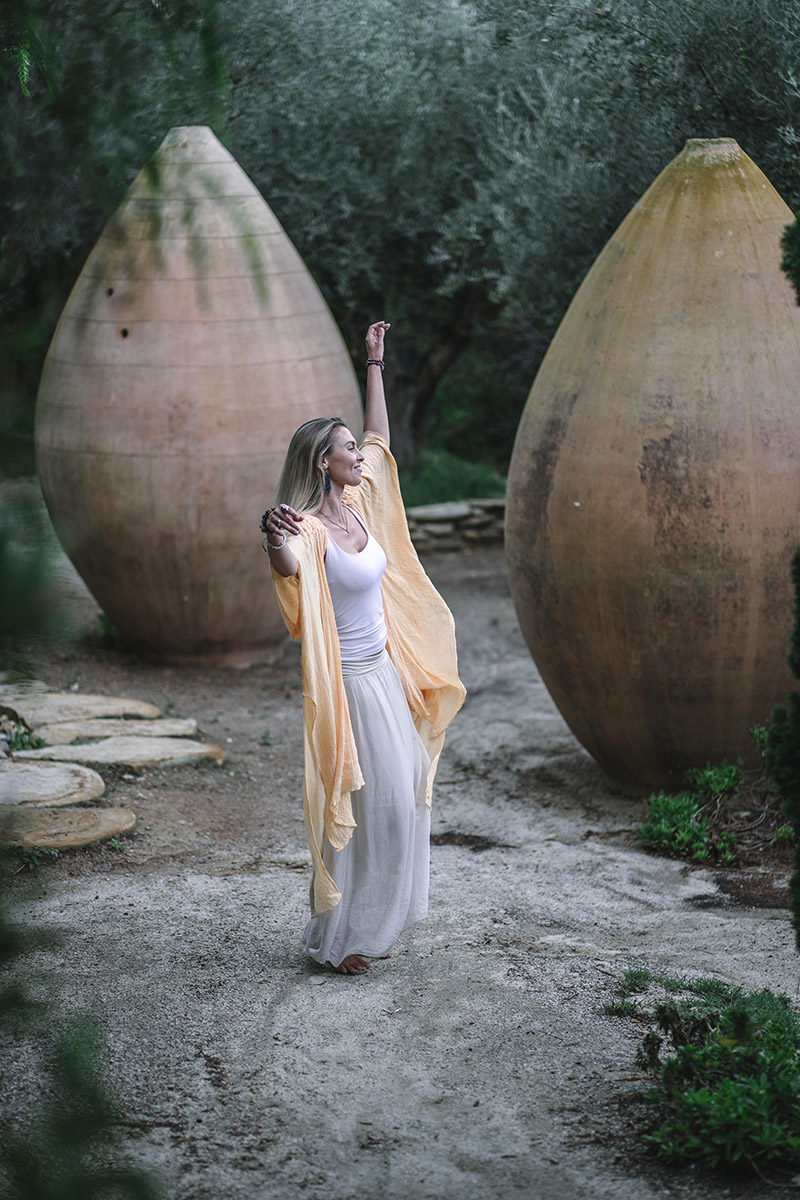
The Allure of Beauty
Beauty shapes memory, emotion, and meaning. It’s how we feel the world more deeply.
curated, wild, intuitive, and woven with care
READ THE JOURNAL
Beauty shapes memory, emotion, and meaning. It’s how we feel the world more deeply.
READ THE JOURNAL
What we find beautiful isn’t just aesthetic. It’s perceptual. It’s physical. It’s how we orient in the world. Beauty doesn’t sit on the surface of things. It shapes what we trust. What we move toward. What we remember. It influences how we make decisions, what we assign value to, and where we place our attention. Whether we’re composing a photograph, deciding who to partner with, or feeling at home in a space, beauty is already shaping perception.
The allure of beauty is real.
It lives in the nervous system.
Beauty isn’t optional. It’s how we regulate, how we remember, and how we connect.
What we call beauty—light, rhythm, balance, emotion, texture—is regulation itself. It’s orientation. It tells the brain where to settle. It gives the nervous system somewhere to land. It reduces uncertainty and creates the conditions for attention.
In a world of overwhelm, beauty becomes a point of return.
The brain responds to beauty in ways that shape behavior and emotional state.
When we encounter harmony, proportion, or contrast, the orbitofrontal cortex lights up—the part of the brain involved in valuation and emotional processing. It helps us determine what’s safe, aligned, or meaningful. 1
Beauty also activates the dopaminergic system. That’s why a particular photograph, gesture, or spatial rhythm can feel energizing, grounding, or even intimate. The nervous system settles. Time slows. Focus sharpens.
Our visual systems are designed to seek signal through noise. Beauty is one of the clearest signals we have.
Beauty creates a field of coherence. A sense of rightness. A physical yes.
When the visual field coheres, attention stabilizes. The eye knows where to rest. The mind stops scanning for threat or opportunity. It can simply be present.
This is why certain spaces feel calming. Why particular photographs stop us. Why some faces hold our gaze longer than others. The nervous system recognizes something it can trust.
Beauty offers the brain a break from vigilance.
It says: here, you can soften.
Here, you can stay.
What draws us in is rarely perfection.
It’s often the thing that interrupts predictability—the pause that lands, the imperfection that feels honest.
We’re drawn to symmetry, yes—but what lingers is often more human. A softness. A rhythm. A moment that mirrored something we didn’t have language for.
Beauty can be subtle. But it stays.
The urge to frame something, to catch a moment and hold it still, is often intuitive. We sense when something clicks. Sometimes for symmetry. Often for completeness.
Framing is a form of knowing.
We mark moments because we recognize something. Even if we can’t place why. Through the viewfinder, we translate what’s felt into what’s seen. We preserve something that felt real, unrepeatable, and somehow true.
Some images bypass narrative. They bypass explanation. They imprint.
They hold an emotional texture: awe, grief, longing, joy. And that texture becomes a marker in time. The image held something that matched something in us.
Beauty stays because it felt like recognition.
It reminded us that we were here.
Beauty shifts across time and culture.
What we find beautiful is shaped by what we’ve seen, what we’ve trusted, what we’ve internalized as meaningful. Visual codes become embedded: Japanese wabi-sabi finding wholeness in weathering, French severity treating restraint as its own excess, Scandinavian minimalism letting negative space do all the work.
Aesthetic memory is partly taught. We inherit ways of seeing.
But beauty isn’t only learned. Sometimes it’s recognized.
There is a universal pulse to it. The way a shadow falls. The tempo of light. A moment that holds stillness without needing silence.
This is the heart of it.
Beauty helps us orient—emotionally, perceptually, physiologically. It shows us where and how we feel coherent.
In unfamiliar environments, beauty sharpens perception. Everything becomes vivid, worth noticing. In familiar ones, beauty invites us back to what we’ve stopped seeing. The same morning light suddenly matters again.
That’s why travel awakens the eye. And why coming home requires choosing to see.
Beauty waits for attention.
We need beauty. As a stabilizer.
It’s how the nervous system finds its place. It’s how meaning lands. It’s how memory forms. It’s what slows us down long enough to feel.
To notice beauty is to signal to the body: You are safe here. You can stay a little longer. This moment matters.
Beauty lives in the unnoticed details. The way light bends around a room. The rhythm of a story told well. The unexpected grace of a fleeting gesture.
It’s how I work. It’s what I follow. It’s what I offer.
As signal. As devotion. As a way of seeing.
x
Anna
If you want to keep exploring beauty, perception, and creative presence, join my newsletter below. I share ongoing reflections, behind-the-scenes notes, and updates on workshops and releases. If you’re drawn to how perception shapes emotion and memory, I explore this more in Shifting Perspectives: A Manifesto on Reframing and the Psychology of Seeing.

Your email address will not be published. Required fields are marked *
show comments
back to the post index
Next ENTRY
Previous ENTRY
keep reading


Leave a Reply